Every California driver knows the anxiety that comes with smog check day, but that worry intensifies when your vehicle doesn’t pass. If you’ve just received that dreaded failed smog certificate, take a breath. You have options, timeframes, and real help available. Here’s everything you need to know about what happens next.
Understanding Your Failed Smog Check Results
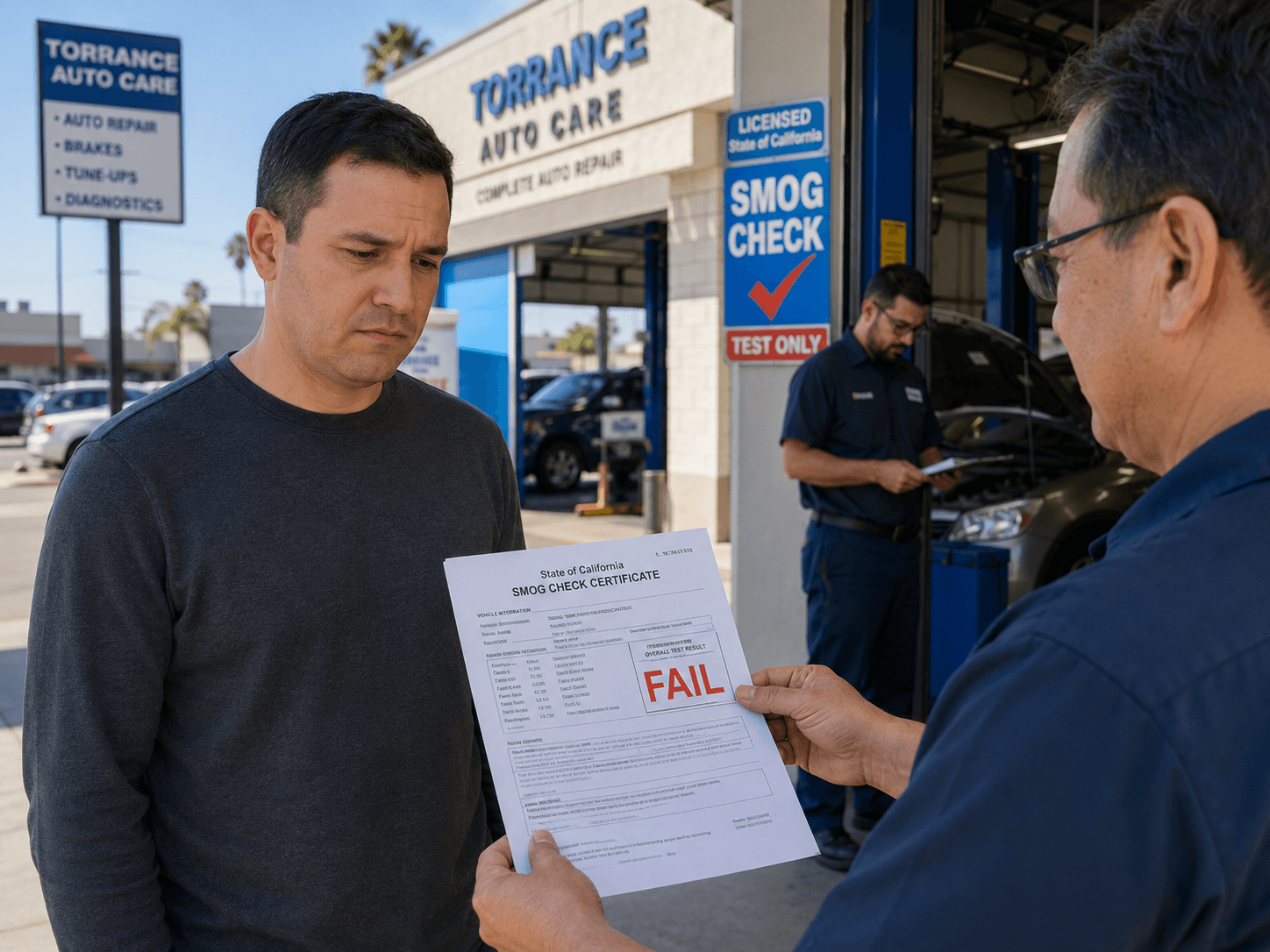
When your vehicle fails a smog check in California, the testing station provides you with a detailed print-out showing exactly what failed and by how much. This isn’t a dead end, it’s a diagnostic report that points directly to what needs repair.
The results typically show:
- Which emission standards your vehicle exceeded
- The specific pollutants (usually nitrogen oxides or particulates)
- How far out of compliance your vehicle tested
- Whether you failed for high or low mileage standards
The station will give you this report, and you’ll need it for the repair process. Keep it safe; you’ll reference it multiple times.
Your Legal Timeline: What You Need to Know
You don’t have unlimited time, but you have a reasonable window. California law gives you 90 days from the failed smog test date to complete repairs and pass a retest. This is important: the 90 days starts from your first failed test, not from when you start repairs.
Here’s the timeline breakdown:
- Day 1-7: Get the full results and research repair options
- Week 2-8: Complete repairs at a certified facility
- Week 8-11: Schedule and complete your retest smog check
- Day 89: Final deadline to have passed (not just scheduled)
If you don’t pass within 90 days, you’ll need to pay for a new smog check entirely—there’s no penalty beyond restarting the process, but it’s another expense to avoid.
Step 1: Identify What Needs Repair
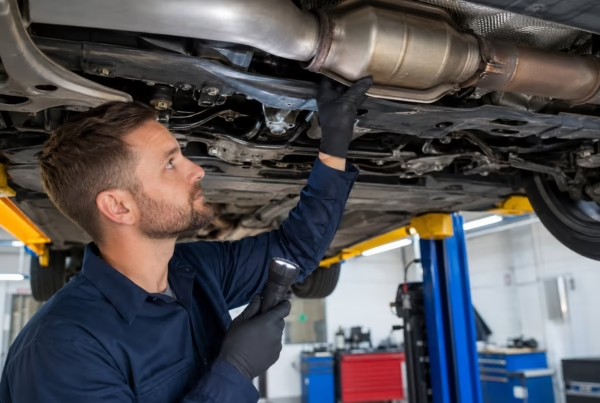
Your failed smog certificate shows the emission category that failed. Before scheduling expensive repairs, consider getting a pre-repair diagnostic scan at your mechanic. A qualified technician can pinpoint the exact issue—sometimes it’s something simple.
Common reasons vehicles fail California smog checks:
- Check engine light is on – This is actually one of the easier fixes; usually a sensor issue
- Oxygen sensors failing – Often $200-$400 to replace
- Catalytic converter problems – More expensive ($800-$2,500), but sometimes repairable
- EGR system issues – Ranges from $300-$1,000 depending on vehicle
- Gas cap leaks – Yes, really! Can cause a fail. Cost: $20-$50
- Engine timing problems – Varies widely; needs professional diagnosis
- EVAP system failure – The emissions canister system; often $400-$1,200
- Fuel injector carbon buildup – Sometimes addressable with fuel additives or cleaning
Not all failures require major repairs. A diagnostic scan ($100-$150) is money well spent and could save you thousands.
Step 2: Explore the California Consumer Assistance Program (CAP)
This is where many Californians get real financial relief, and frankly, not enough people know about it.
If your vehicle fails smog and repair costs exceed 50% of your vehicle’s Blue Book value, California’s Consumer Assistance Program (CAP) can help. The program offers two main benefits:
Option 1: Repair Assistance (up to $2,500) CAP reimburses you up to $2,500 for certified smog-related repairs. This covers parts and labor at a Bureau of Automotive Repair (BAR) approved facility.
Option 2: Vehicle Retirement/Replacement If your car is worth $9,500 or less and repairs exceed 50% of its value, CAP provides $5,000 toward purchasing a used replacement vehicle or can help retire your current vehicle (you keep the $5,000 and the vehicle is recycled).
Who qualifies:
- California registered vehicle owner
- Vehicle failed a smog test
- Annual household income at or below 225% of federal poverty level (roughly $65,000 for a family of four)
- Vehicle registered in California for at least two years
Many drivers in Torrance qualify and don’t realize it. The application process takes 1-2 weeks, and funds are processed quickly.
Step 3: Get Repairs Done Right
Once you know what needs fixing, you have three repair options:
Option A: Licensed Mechanic (Not Smog Station) Find a trusted BAR-certified repair facility. Your failed smog certificate is now your diagnostic tool—show it to a mechanic and get a repair estimate. For many common failures, this is the most affordable route.
Option B: Smog Station’s Affiliated Shop Many smog stations have partnerships with repair shops. EZ Smog Torrance can recommend trusted, certified facilities in the Torrance area that specialize in emission repairs. You’ll know exactly what you’re getting into.
Option C: Manufacturer Dealership If your vehicle is under extended warranty or you want OEM parts, the dealership guarantees the repair will pass. It’s typically more expensive but offers maximum assurance.
Pro tip: Don’t rush. Get multiple repair estimates. A $400 repair difference isn’t unusual between shops, and you have 90 days to complete this.
Step 4: Schedule Your Retest at the Right Time
Timing matters for your retest smog check. Your best strategy:
- Wait 1-2 weeks after repairs – This gives your vehicle’s computer time to clear old fault codes and adapt to new parts
- Warm up your engine before the test – A fully warmed engine tests better
- Choose low-traffic hours – Come in early morning if possible; cleaner air around the facility sometimes helps
- Bring documentation – Bring your repair receipts (not required, but good to have on hand)
At EZ Smog Torrance, we’ll review your repairs and make sure everything is properly configured before testing. Many customers appreciate having someone who can spot obvious issues before the official retest.
What If You Fail Again?
You’re not alone if this happens—about 8% of retests fail. The good news: you get another 90 days from your second failed test to pass.
However, there’s an important threshold: If you fail three times, your vehicle is labeled a “gross polluter” and becomes ineligible for regular driving. This is rare, but it’s the point at which CAP retirement becomes your realistic option.
Most drivers pass their retest after proper repairs. The two-failure scenario is usually caused by:
- Repairs that didn’t address the root problem
- Getting a retest too soon (before computer calibration)
- Different test conditions between facilities
Timeline for Certificate Delivery to DMV
Once you pass your retest, the smog station submits results electronically to California DMV—usually within 24 hours. DMV processes it and links it to your vehicle registration.
You don’t need to do anything. Your registration is automatically updated. If you’re paying for a renewal, the smog clearance enables that. If you’re not renewing yet, the certificate is on file for when you need it.
Pro tip: Wait 2-3 days, then check your smog history online at bar.ca.gov to confirm it posted. Sometimes it takes a few days to fully process.
Common Questions About Failed Smog Checks
Q: Does a failed smog check go on my record? A: Yes, it’s recorded at BAR (Bureau of Automotive Repair) and linked to your vehicle. However, once you pass the retest, both are on record. It doesn’t affect your driving record or insurance.
Q: Can I sell my car if it failed a smog check? A: Not in California without fixing it first. The state won’t issue a smog certificate for title transfer if the vehicle has a failed test on record in the last 30 days.
Q: What if I can’t afford repairs? A: Apply for CAP (see Step 2 above). If you don’t qualify for CAP, some non-profits in Torrance offer small grants or interest-free loans for emissions repairs. Ask your mechanic.
Q: Does my check engine light need to be fixed? A: If it’s on, your vehicle will fail a smog test. Full stop. Some failures are simple sensor issues; some are mechanical. You must address it to pass.
Q: Can I get a smog-only station vs. a repair station? A: Yes. Some stations only test (no repairs). Some stations both test and repair (called “test and repair”). If you already have a mechanic, a test-only station avoids conflicts of interest—they have no financial reason to recommend repairs.
Why Local Matters: Choosing Your Retest Station
Not all smog stations are created equal. After spending money on repairs, you want your retest at a station that:
✓ Uses calibrated, well-maintained equipment
✓ Tests consistently (you want fair results, not equipment drift)
✓ Has patient, experienced staff who understand failed smog situations
✓ Can answer questions about repair quality
✓ Understands local driving conditions (some areas have specific testing considerations)
At EZ Smog Torrance, we see retests every week from customers who’ve completed repairs. We understand the process, the anxiety, and what it takes to pass. We also have relationships with certified repair shops in the area and can refer you to honest, quality facilities that won’t overcharge for simple fixes.
Your Action Plan: This Week
- Request a copy of your full failed smog results from the testing station
- Get a diagnostic scan at a trusted mechanic ($100-$150)
- Gather repair quotes from at least two shops
- Check CAP eligibility if repair costs seem high (visit capincalifornia.org)
- Schedule repairs with one week buffer before your target retest date
Moving Forward
A failed smog check feels like a setback, but California’s system is actually designed with flexibility. You have 90 days, multiple repair options, financial assistance available, and clear steps forward. Thousands of Torrance residents complete this process every year and get back on the road with compliant, emissions-safe vehicles.
If you’re in Torrance and ready to schedule your retest smog check after repairs, or if you’d like a consultation about your failed results, EZ Smog Torrance is here to help. We’ll review your repair documentation, discuss next steps, and make sure you’re set up for a passing result.
Your vehicle isn’t broken. It just needs the right fix and the right partner to verify it.