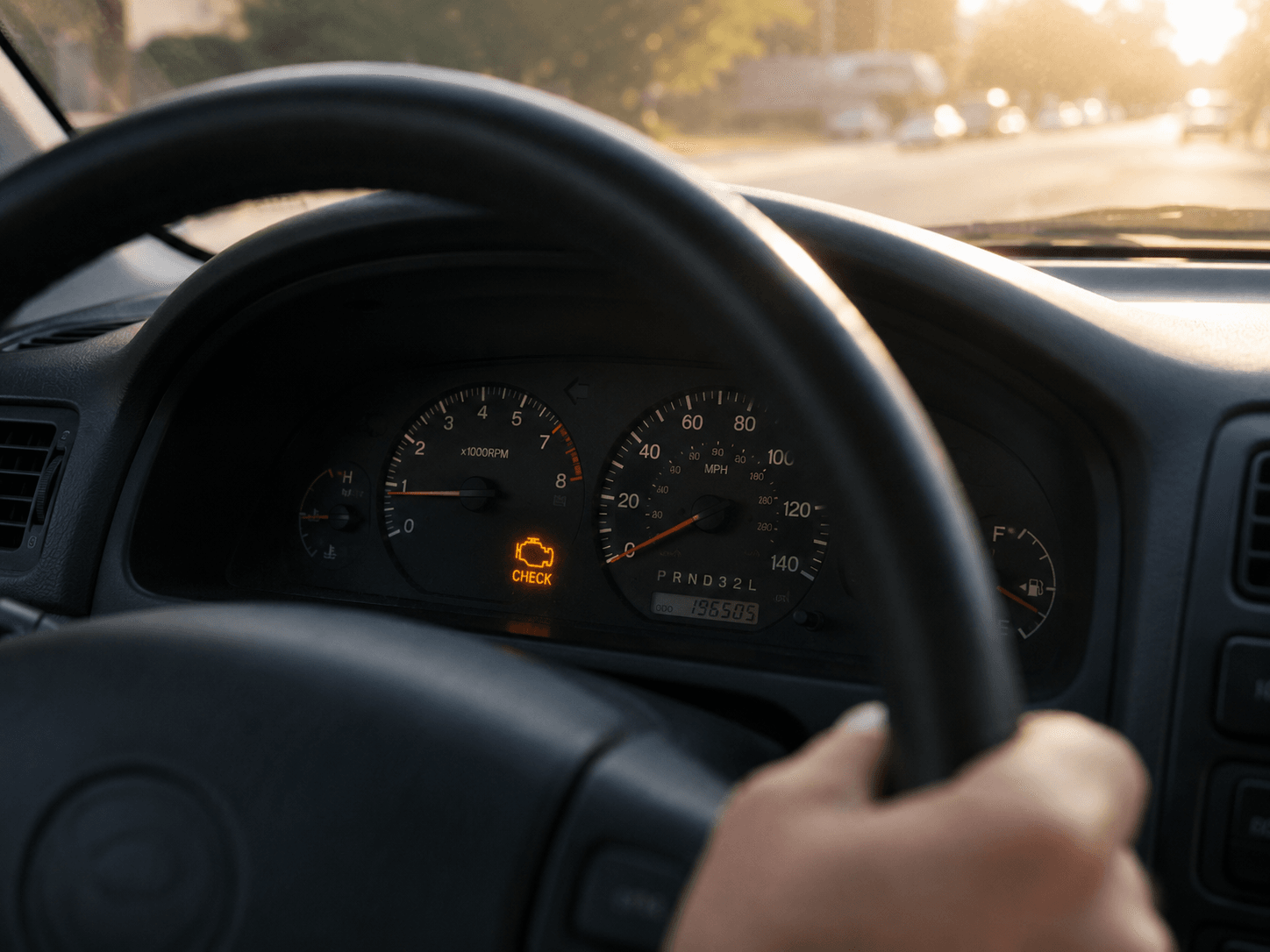
If your check engine light is on and you have a smog check coming up, here is the short answer: you will fail. There are no exceptions in California, regardless of how minor the underlying issue might be or how well your vehicle is actually running.
That is the bad news. The good news is that this is one of the most fixable smog check problems out there, and once it is resolved, getting back on the road is usually quick.
Why an Illuminated Check Engine Light Is an Automatic Fail
In California, a lit check engine light, technically called a Malfunction Indicator Lamp or MIL, is treated as an automatic smog check failure regardless of your actual tailpipe emissions. According to California’s Bureau of Automotive Repair, the check engine light indicates a problem with the vehicle’s emissions system, and a vehicle will not pass a Smog Check with the check engine light on.
This rule exists because the light is your vehicle’s own onboard computer telling you it has detected an emissions-related fault. Even if your tailpipe readings happen to look fine at that exact moment, the underlying problem can get worse over time and the testing protocol does not make exceptions for vehicles that seem fine on the surface.
What Triggers a Check Engine Light Before a Smog Check?
The check engine light can come on for dozens of reasons, but a handful of causes show up again and again ahead of failed smog tests.
Faulty oxygen sensor. The oxygen sensor monitors how much unburned oxygen is in your exhaust and helps the engine adjust its air-fuel mixture. A failing sensor throws that balance off and increases emissions. It is also one of the more affordable fixes on this list.
Loose or damaged gas cap. This one surprises people every time. A gas cap that is not sealing properly allows fuel vapors to escape, which the EVAP system detects and flags. Sometimes the fix really is that simple.
Catalytic converter issues. The catalytic converter converts harmful exhaust gases into less harmful ones. When it is damaged or worn out, emissions rise noticeably. This is one of the more expensive repairs on the list, but it is also one of the most direct causes of a smog failure.
Worn spark plugs or ignition coils. Failing spark plugs cause misfires, which increase emissions and can trigger the check engine light. Spark plug replacement is routine maintenance and relatively inexpensive.
EVAP system leaks. Beyond the gas cap, cracked hoses or a faulty purge valve in the evaporative emissions system can let fuel vapors escape and set off the light.
Can You Just Clear the Code and Pass Anyway?
No, and this is one of the most common mistakes drivers make. Clearing a trouble code without actually fixing the problem resets your vehicle’s onboard diagnostic monitors. When you bring your car in for testing right after a code clear, the system will not have completed its self-checks yet, and the smog technician will see the vehicle as Not Ready rather than Pass or Fail.
A Not Ready result means you still cannot pass. You need to drive the vehicle normally for several days, sometimes covering 50 to 100 miles, to allow the readiness monitors to complete their checks. If the underlying problem was not actually fixed, the light will simply come back on once the monitor reruns its test.
The same applies if your battery was recently disconnected for any reason, including routine maintenance. A battery disconnect resets the monitors just like a code clear does.
What Should You Do If Your Check Engine Light Is On?
Here is the path forward if you are dealing with a lit check engine light ahead of your smog check.
Get a proper diagnostic scan. Do not guess. A scan tool will read the stored trouble codes and tell you exactly what system triggered the light. This is the fastest way to know what you are actually dealing with.
Get the underlying issue repaired, not just the code cleared. Address the actual cause, whether that is a sensor, a gas cap, spark plugs, or something else.
Drive the vehicle normally for several days after the repair. This lets the readiness monitors complete and confirm the fix actually worked.
Come back for your smog check once the light is off and monitors are complete. At that point you should be in good shape to pass. You can also check your smog check history beforehand to see your vehicle’s past results.
What If the Repair Is Expensive?
Some check engine light causes, like a failing catalytic converter, can be costly to fix. If you are facing a significant repair bill and meet income requirements, California’s Consumer Assistance Program (CAP) can help cover smog-related repair costs.
Read our full guide on qualifying for the CAP program to see if you might be eligible.
There is also a repair cost waiver option for drivers who spend a certain amount trying to fix the issue but still cannot pass. This is worth asking about if you have already invested significant money into repairs without success. Full details on eligibility are available directly from BAR’s smog check program page.
How EZ Smog Check Can Help
If your check engine light comes on before your scheduled smog check, the worst thing you can do is ignore it and hope it goes away. Bring your vehicle in and our technicians can perform a diagnostic scan to identify exactly what is going on before you waste a trip on a guaranteed failure.
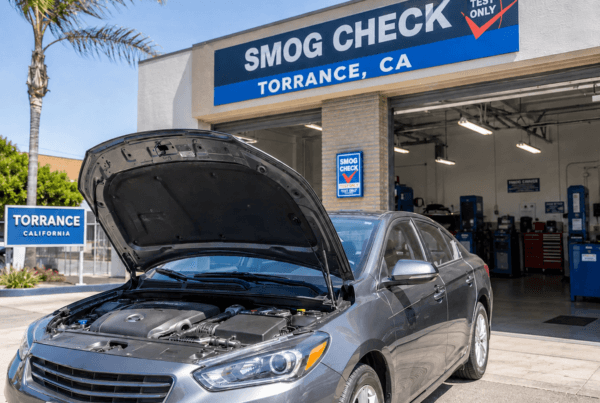
We are a STAR certified station serving Torrance and the South Bay, located conveniently near the DMV at 1719 Abalone Ave, Torrance, CA 90501. Most inspections take 15 to 20 minutes, and walk-ins are always welcome.
Call 310-533-1940 if you have questions about your specific situation before coming in. You can also read more on how often you actually need a smog check if you are unsure about your renewal timeline.
Frequently Asked Questions
Will my car automatically fail smog with the check engine light on? Yes. In California, an illuminated check engine light results in an automatic smog check failure regardless of your actual emissions levels. There are no exceptions.
Can I clear the code myself and pass the test? Clearing the code without fixing the underlying issue will cause your vehicle to register as Not Ready rather than Pass, since the readiness monitors reset. You will need to drive the vehicle for several days before the monitors complete and the test can proceed.
How long after a repair can I get my smog check done? It depends on your specific vehicle and which monitors need to complete, but generally you should drive normally for several days, sometimes 50 to 100 miles, before returning for your test. Your technician can check the readiness status with a scan tool to confirm.
What is the most common reason for a check engine light before a smog check? A faulty oxygen sensor and a loose or damaged gas cap are two of the most frequent and most fixable causes. A proper diagnostic scan is the only reliable way to know for certain.
Is there financial help if my repair is expensive? Yes. California’s Consumer Assistance Program (CAP) can help income-qualifying drivers cover up to $1,200 in smog-related repair costs.