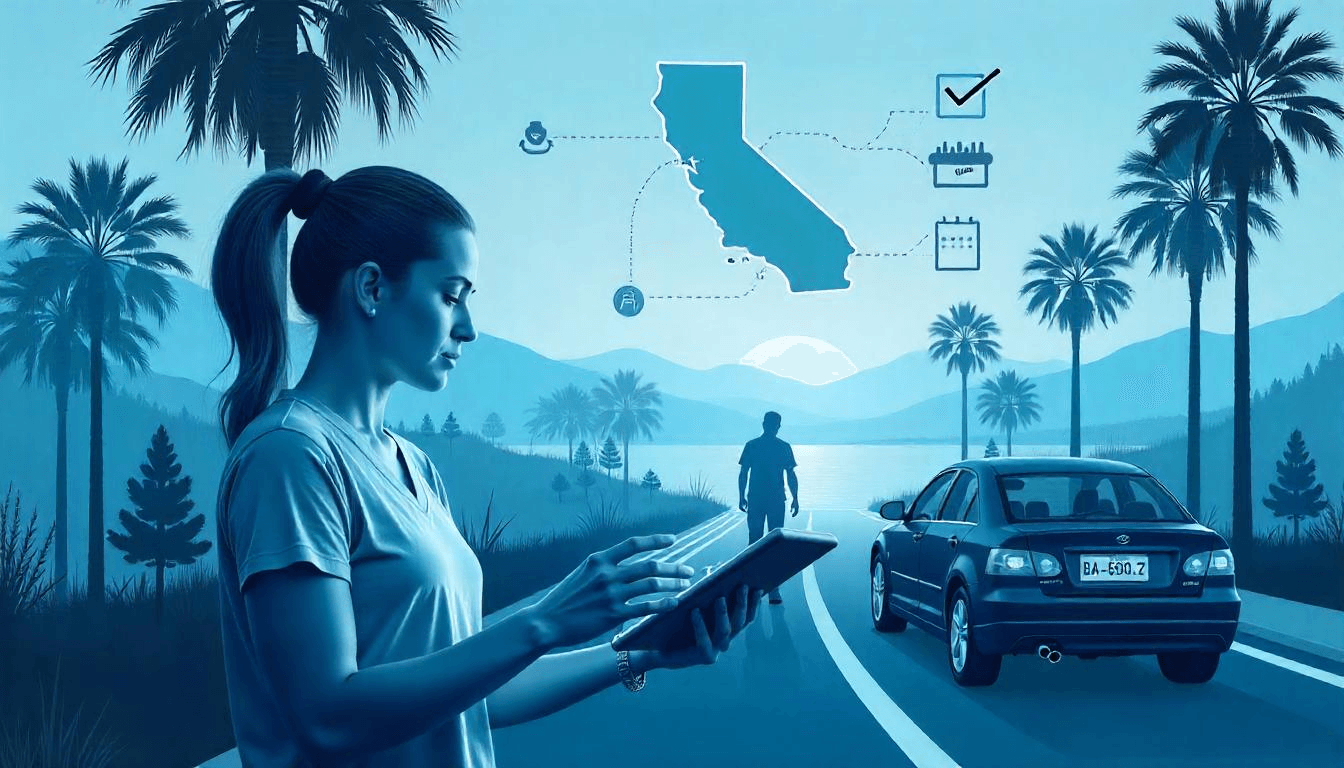
Every smog check done in California is recorded by the Bureau of Automotive Repair, and you can look up a vehicle’s record yourself for free. All you need is a VIN or a license plate, and the lookup takes a couple of minutes. Use the VIN if you have it, because BAR says plates can change and the VIN gives the most accurate results.
This guide walks through the lookup, explains why the same record goes by so many names, and covers the part most guides skip: what to do when the search comes back empty.
Run the Lookup in Four Steps
- Open BAR’s vehicle inspection history page. This is the official tool, and it is the same record whether you search for “smog history,” “test history” or “inspection history.”
- Find your VIN. It is printed on your registration card, on a plate at the base of the windshield on the driver’s side of the dashboard, and inside the driver’s door jamb.
- Enter the VIN or the license plate. If you try the plate and get nothing back, switch to the VIN.
- Read the results. Each inspection result on file for the vehicle is listed. Most people use this to confirm the result and date of their most recent test.
Smog History, Test History, Inspection History: It Is the Same Record
A lot of people search for this under different names, and that is part of why it is hard to find. “Smog check history,” “smog history,” “vehicle test history,” “smog record” and “inspection history” all lead to the same BAR database. BAR currently calls the tool “Check a vehicle’s inspection history.” If a page asks you to pay for any of these, it is not the official lookup.
When the Lookup Shows No Results
An empty result is common, and it usually has a simple explanation.
The plate does not match. BAR notes that a vehicle’s plate number may change. If you searched by plate, try the VIN. A single wrong character in either one returns nothing, so double-check what you typed against the registration card.
The test was today. BAR says its records update daily at midnight. A test done this afternoon may not appear until the next day, so check again tomorrow before you assume something went wrong.
The vehicle has never been tested in California. A car that just arrived from another state has no California inspection record until it has its first test here. Our guide to smog checks for out-of-state vehicles explains what a first registration requires.
The vehicle did not need a test. Newer vehicles skip the smog check at renewal, and fully electric vehicles are exempt, so a record can be legitimately empty. See how often you really need a smog check for who is covered.
If none of those fit and you are sure you were tested, call the station that did the test and ask them to confirm the result was submitted.
What People Use the History For
Buying a used car. A record of clean passes is a good sign the emissions system has been looked after. Repeated failures can be a reason to ask the seller questions before you commit. The smog record is only one slice of a car’s past, so read smog check history vs. vehicle history before you buy. It explains what a CARFAX-style report covers that BAR does not.
Confirming your last test. If you are not sure when your last test was, the history is quicker than digging through paperwork. Your DMV renewal notice is still the final word on whether a test is required for your next renewal.
Checking that your result posted. After a passing test, BAR notes that certificates are transmitted to the DMV for registration purposes. If you are waiting on a renewal, the history is a quick way to confirm your result is on file.
If You See a Failed Test
A failed result on the record means the car needed repairs at that visit, not that it can never pass. If a failure is yours, what happens if your smog check fails in California explains the next steps. If repair cost is the sticking point, the Consumer Assistance Program may help qualifying drivers.
When Is Your Next Smog Check Due?
Most vehicles need a smog check every two years at registration renewal. Your renewal notice tells you whether one is required this time, and the history helps you see how long it has been since the last one. A passing certificate is valid for 90 days, which BAR notes on its smog check page, so you can test ahead of your deadline without losing it.
Frequently Asked Questions
Is the smog check history lookup free?
Yes. BAR’s inspection history tool is free to use.
How current is the information?
BAR says records are updated daily at midnight, so a same-day test may take until the next day to show.
Should I search by plate or VIN?
The VIN. BAR advises it for the most accurate results because a plate number can change.
Is smog history the same as a Carfax report?
No. The BAR record covers smog inspections only. A vehicle history report covers things like accidents and title status.
Why does my vehicle have no history?
Usually the plate or VIN was mistyped, the test was today, the car is new to California, or it has not needed a test yet.
Get Your Next Smog Check at EZ Smog Check in Torrance
If the history shows your next test is due, EZ Smog Check can take care of it. We are a STAR-certified station, so we test both regular and STAR-required vehicles. If you want an idea of the price first, see how much a smog check costs in California, and if it is your first time, what to expect at a first smog check walks you through the visit.
EZ Smog Check 1719 Abalone Ave UNIT 407, Torrance, CA 90501 Phone: 310-533-1940
Hours: Monday to Friday, 8:00 am to 5:00 pm Saturday, 9:00 am to 4:00 pm
No appointment necessary. Pass or have a free re-test.